

Jameson
Jameson needed a stand at a trade show where every neighbouring brand was competing for the same buyers with the same tools. A whiskey with this much heritage cannot be sold from a counter with a logo on it, so the answer was not a stand that displays the product but a room that behaves like the place people actually drink it.
The build
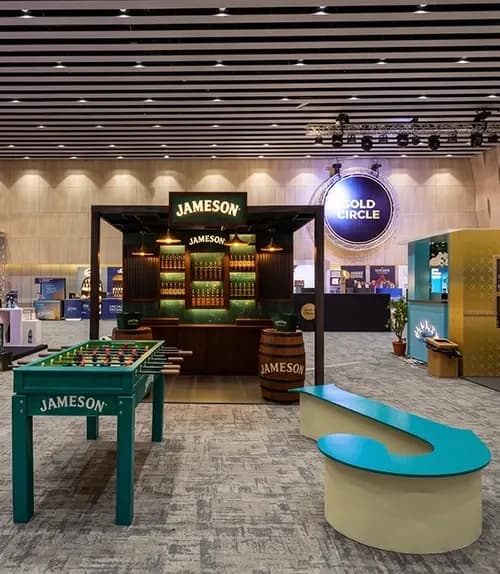
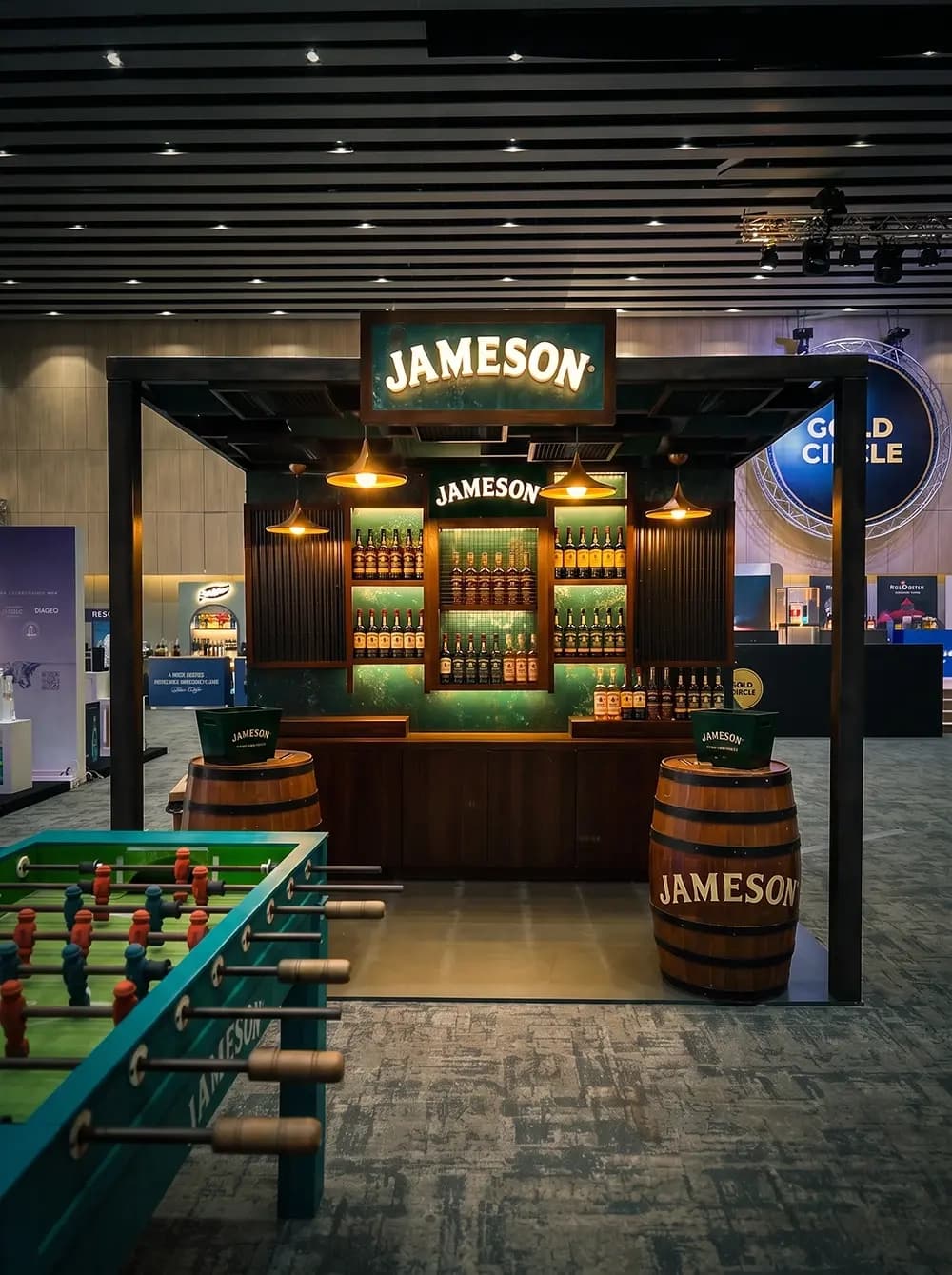
Proink designed, fabricated and installed a bar stand built as a pub, using real materials rather than printed impressions of them.
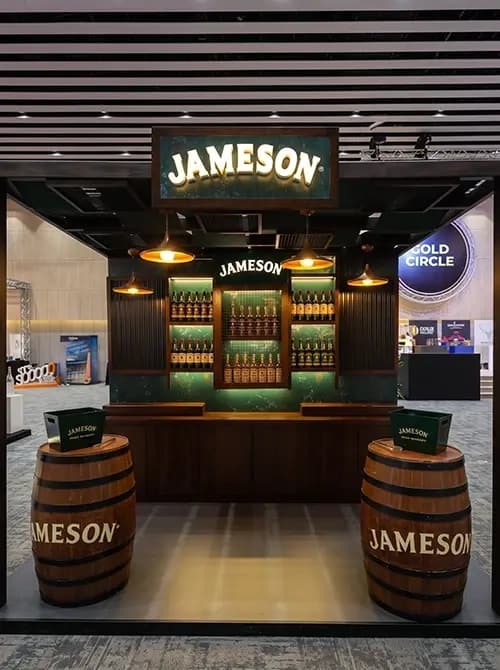
The bar is the anchor. A full timber counter with fluted panelling behind it, topped by an illuminated brand sign and lit from above by warm pendant fittings. Pendant lighting is a small decision that changes everything in a hall, because trade show venues are lit flat and cold from overhead, and warm light at head height immediately reads as domestic rather than commercial.
The bottle display sits in a recessed backlit unit finished in the brand's green. Backlighting whiskey is a specific technical problem, since the liquid itself is the most attractive thing about the product and it only comes alive when light passes through it. Front lighting a bottle of whiskey makes it look like a bottle. Lighting it from behind makes it look like whiskey.
Whiskey barrels are used as standing tables. Real barrels, not props, which matters for a heritage brand where the maturation story is the entire argument for the price.
A structural timber frame defines the footprint. In an open hall with no walls, that frame is what creates the sense of being inside somewhere rather than standing in a space between stands.
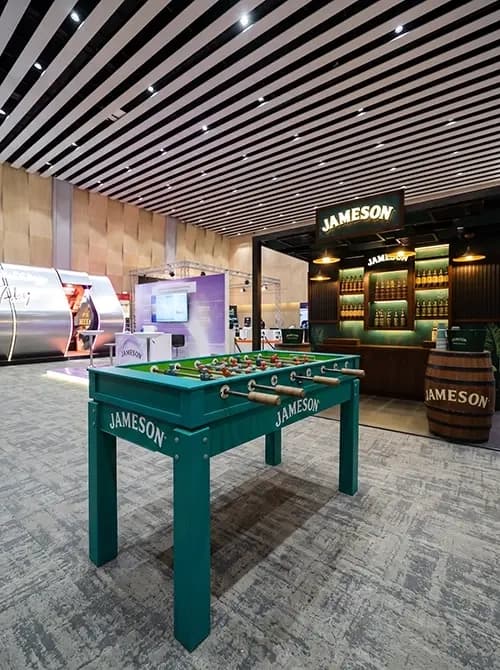
A branded foosball table sits at the front of the stand, produced in the brand's green with the logo across the play surface and both ends.
Why it works
The competitive problem at a trade show is that everyone has product, everyone has lighting and everyone has staff. What almost nobody has is atmosphere, because atmosphere requires materials that cost more than printed board.
Using real timber and real barrels is the whole strategy. A visitor cannot articulate why one stand feels more substantial than another, but they feel it immediately, and for a spirit sold on age and provenance that feeling is the product argument.
The foosball table is doing more work than it appears to. It gives people a reason to stay on the stand rather than pass through, and unlike a screen or a giveaway it requires two people, so it manufactures the exact thing a trade show stand exists to produce: a conversation between a buyer and a brand.
It is also on-brand rather than generic. A foosball table belongs in a bar, so it reinforces the pub idea instead of interrupting it. Most engagement mechanics at trade shows are borrowed from anywhere and feel it.
Warm light against a cold hall is the last advantage. Photographs of this stand look like a pub, and photographs of the stands around it look like a trade show.